The Stress-Spine Connection
When Stress Gets Physical
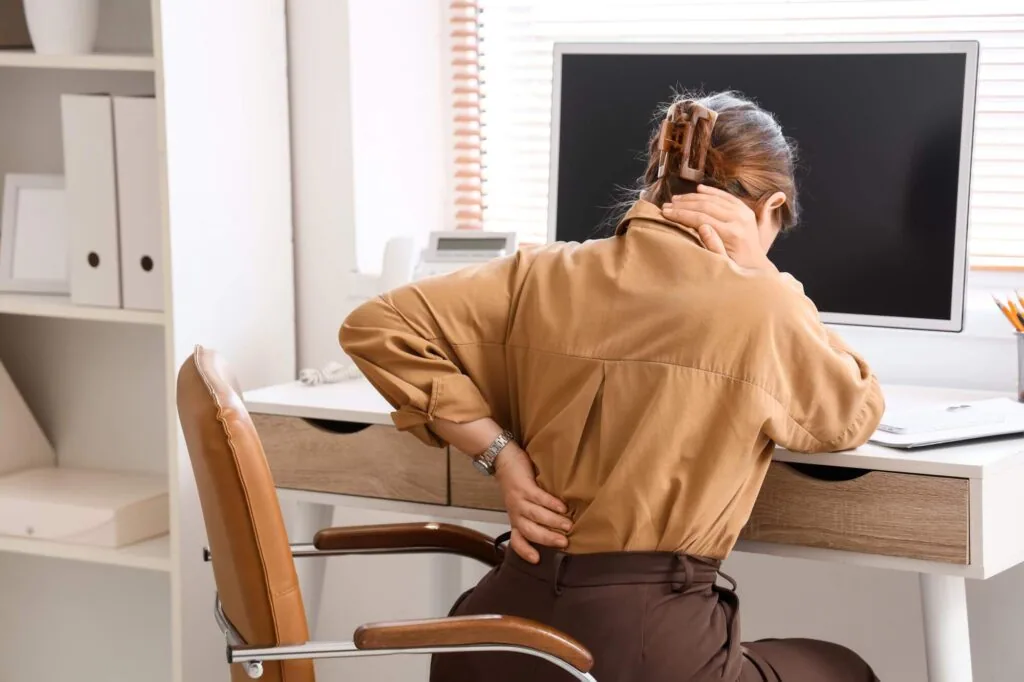
Anxiety doesn’t just live in your mind—it lives in your body. When you’re stressed, worried, or overwhelmed, your nervous system shifts into high alert. Blood flow redirects to your limbs, your breathing becomes shallow, and your muscles—especially those in your neck, shoulders, and upper back—tighten into protective knots. Over time, this stress-induced muscle guarding can pull your spine out of alignment, creating a painful cycle that feeds anxiety right back into tension.
Understanding this connection is the first step toward breaking it.
The Anatomy of Stress Tension
Your body’s stress response is ancient and wise—designed to help you escape danger. But modern stress doesn’t require running away. Instead, your muscles stay clenched, your posture collapses inward, and your breathing tightens. Three physical patterns emerge:
- Muscle guarding. Your trapezius (the large muscle across your upper back and shoulders) contracts protectively. Your neck muscles shorten. This sustained tension restricts blood flow and oxygen delivery to those tissues, making them sore and stiff.
- Shallow breathing. Anxiety narrows your breath into your chest rather than your belly. Shallow breathing reduces oxygen intake, feeds fatigue, and signals your nervous system to stay in high alert—a vicious loop.
- Postural collapse. Stressed and anxious people often hunch forward, rounding the shoulders and dropping the chin. This compounds upper spine misalignment and puts extra strain on your cervical (neck) vertebrae and the nerves they protect.
Misalignment Amplifies Anxiety
Tension and poor posture can pinch the nerves that run through your cervical spine. When nerves are compressed, they send pain signals back to your brain. Your brain interprets this pain as a threat—so it triggers more anxiety, which tightens your muscles further. What began as a mental stressor becomes a physical problem that keeps anxiety alive.
This is why stretching alone often isn’t enough. While stretches help, they don’t address the underlying spinal misalignment driving the tension in the first place.
Stress-Relief Tool
Spinal adjustments work to restore alignment and release the physical tension holding your anxiety in place. When vertebrae are realigned, nerve compression eases, pain diminishes, and blood flow improves. Many patients report that after an adjustment, their breathing naturally deepens and their shoulders visibly drop. The nervous system receives the signal that the threat has passed—and relaxation becomes possible again.
Chiropractic care isn’t a replacement for therapy or stress management practices, but it is a powerful complement. By addressing the physical component of stress, you interrupt the cycle at a level that stretching, meditation, or breathing exercises alone may not reach.
Posture and Ergonomics: Your Daily Stress Shield
Between adjustments, your awareness of posture and workspace setup makes a real difference. Slouching over a laptop, cradling your phone between your ear and shoulder, or sitting with forward head posture all feed into the stress-tension loop. Small adjustments yield big results:
- Position your screen at eye level so you’re not looking down.
- Keep your shoulders relaxed, not hunched toward your ears.
- Take movement breaks every 30 minutes—even a 2-minute walk helps reset your nervous system.
- Practice belly breathing: inhale slowly through your nose for a count of four, hold for four, exhale for four.
A Whole-Body Approach to Stress
Anxiety is real, and so are its physical consequences. But the good news is that you don’t have to choose between addressing your mind and your body—they work together. Regular chiropractic adjustments from Dr. Espinosa, mindful posture, intentional breathing, and movement create a comprehensive stress-management toolkit. When your spine is aligned, your nervous system can relax. When your nervous system relaxes, your mind follows.
If neck or shoulder tension has become a constant companion to your stress, it’s worth exploring whether spinal alignment is part of your solution. Contact us to schedule a consultation, and let’s work together to break the stress-tension cycle.
Call (916) 457-8825